24H After Sale Service Center
Wechat: EXCITECH-SUPPORT1
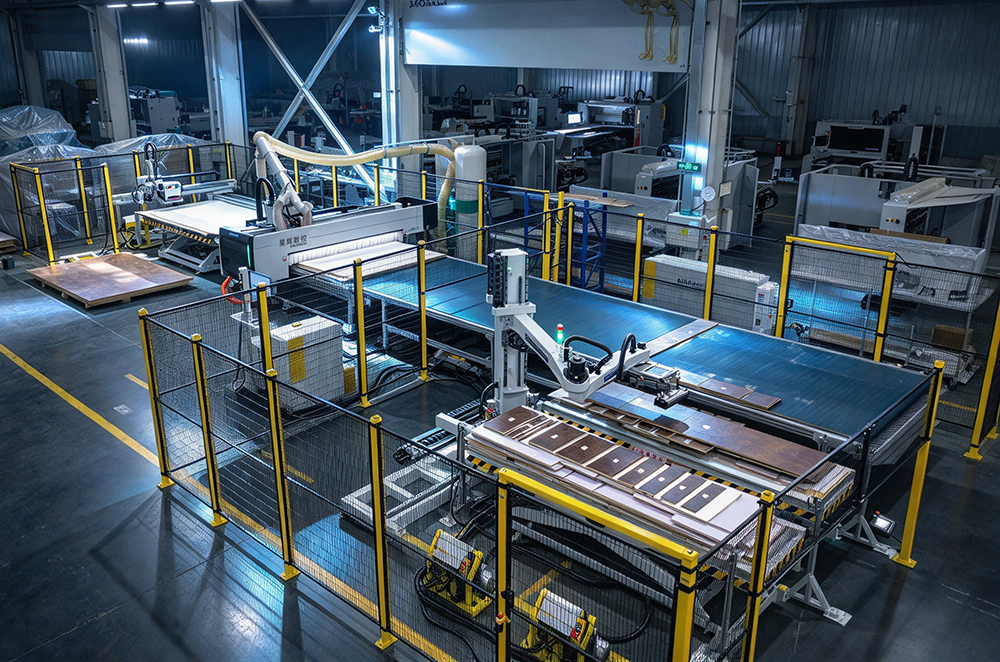
Stacking Robot RecommendationStacking Robot RecommendationFor whole-house customization factories, panel material handling has long been an overlooked bottleneck for efficiency. After nesting, panel sorting, stacking and transfer still rely heavily on manual labor. With mixed panel sizes and large quantities, workers perform repetitive lifting for long hours. This not only causes surface scratches and misaligned placement but also makes it hard to maintain a consistent production cycle. When planning automation upgrades, most factories first look at Stacking right after the nesting process. However, with countless robot models on the market, blind selection often results in poor compatibility with existing production lines, failing to deliver expected performance after installation.
When picking Stacking equipment for custom panel production, payload and reach are not the only criteria. Panel Stacking follows completely different logic from cartons or bagged goods. Panel dimensions vary widely, and incoming positions are unfixed, calling for dedicated capabilities in positioning recognition, stacking sequence and neat pallet patterns. First, evaluate how well the machine handles mixed panels of multiple sizes. Second, check if the control system can exchange signals with nesting machines to achieve process linkage. Besides, workshop space is a hard constraint. Most older factories have narrow aisles and compact machine layouts, leaving little room for large 6-axis robots. Compact 4-axis models fit better for automation upgrades at small and medium custom furniture plants.
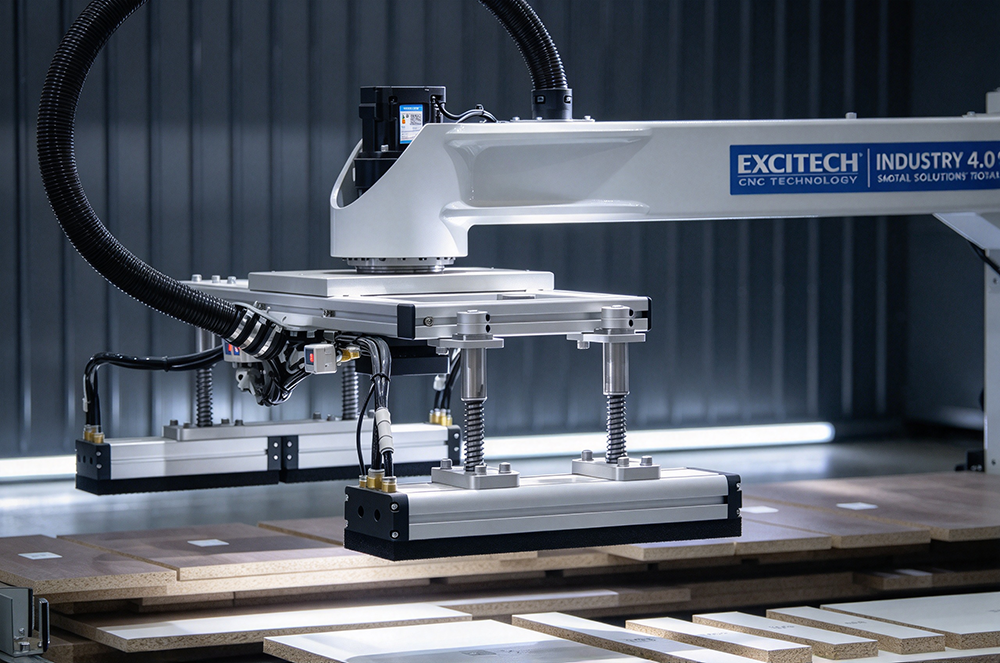
FAQQ: Our factory already has a mature nesting line. Will adding a Stacking robot require major rework on the existing line? A: Not necessarily. Some solutions require conveyor frame adjustments, while certain models can connect directly to the nesting outlet, minimizing civil engineering and conveyor modification work. Ask the supplier to run workflow simulation based on your site layout first, and opt for solutions with lower integration barriers. Q: Can Stacking robots only run fixed pallet patterns and easily make mistakes with mixed panel batches? A: The deciding factor lies in the supporting algorithms. Basic robots only follow pre-set paths with low fault tolerance for constantly changing panel lists. Models equipped with dedicated recognition and Stacking algorithms can adjust placement positions and stacking order in real time according to panel data, perfectly matching high-variety, small-batch orders in whole-house customization. Q: Will post-sales maintenance be troublesome with long lead times for spare parts? A: It all depends on the R&D model. System integrators mostly buy robot bodies and third-party software, so on-site tuning and algorithm updates are subject to external suppliers. Brands with in-house R&D and manufacturing control both hardware and software, offering faster response for commissioning and future function upgrades. What most whole-house customization factories really need is not just a robot that grabs and stacks panels, but a full automation unit tailored to nesting processes and panel characteristics. EXCITECH 4-axis nesting Stacking robot is independently developed and manufactured by EXCITECH. It features self-developed vision recognition and exclusive Stacking algorithms, engineered specifically for stacking panels right after nesting. It connects to production data from the nesting cell, identifies panels of different sizes, and automatically generates optimized pallet patterns. With a compact footprint, it fits most workshop layouts for whole-house customization manufacturers. It reliably undertakes Stacking work post nesting, cuts panel damage caused by manual handling, and stabilizes the overall throughput of the nesting line.
|